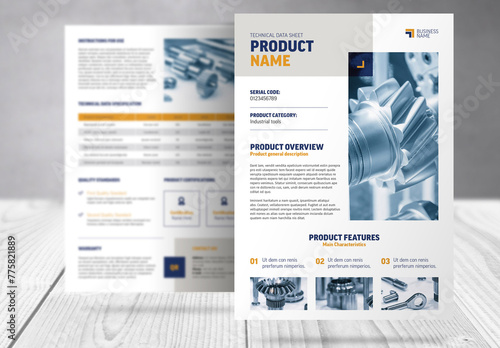
Product Specifications Are the Bridge Between Manufacturers and Architects
For construction product manufacturers, getting specified is everything. Architects, engineers, and specifiers rely on accurate, well-written product specs to decide which systems or materials to include in their designs.
However, producing these documents is time-consuming, often repetitive, and requires careful attention to detail. One mistake in a technical description or compliance statement can damage trust or cost a project opportunity.That’s where AI-assisted specification writing comes in. By using modern AI tools, manufacturers can now produce consistent, professional product specs that speak directly to architects’ needs—without losing technical accuracy.
What Is AI Product Specification Writing?
AI product specification writing uses artificial intelligence (AI) to create or refine the technical and descriptive content used in downloadable product specification documents, such as those hosted on NBS or shared through RIBA Product Selector.
AI tools can assist with:
- Drafting the core product description
- Structuring performance and compliance data
- Checking alignment with industry standards like LEXiCON
- Generating variations for different use cases or performance levels
- Writing architect-friendly summaries that explain benefits, not just data
Example AI Prompt:
“Write a clear, accurate product specification for an acoustic ceiling tile suitable for educational buildings, including compliance with UK building regulations.”
Why Product Specs Matter for Manufacturers
Product specifications are more than just technical documents—they’re marketing and communication tools.
They help your products get included early in project design stages, where decisions are often locked in for the duration of the build.
Common Issues with Traditional Spec Writing
- Inconsistent formatting between products
- Outdated performance data due to manual updates
- Overly technical language that doesn’t highlight benefits
- Slow document turnaround times during tenders or architect requests
AI tools can resolve these challenges by automating accuracy, readability, and tone.
How AI Improves Product Specification Writing
Below are the key benefits of integrating AI into your specification writing process.
1. Improved Speed and Consistency
AI can draft base templates and replicate structure across multiple product lines, ensuring all documents have a consistent layout and tone.
Text Graph Example: Time and Error Reduction
Manual Spec Writing
| Time per spec: ██████████████████ (6 hrs)
| Error rate: ██████ (15%)
AI-Assisted Spec Writing
| Time per spec: ███ (1.5 hrs)
| Error rate: ██ (3%)
2. Enhanced Accuracy and Compliance
AI systems trained on construction datasets can help flag missing compliance information (like fire rating, acoustic performance, or sustainability data) before publishing.
This ensures specs are:
- Compliant with UK standards
- Clear in their performance statements
- Consistent across all documents
3. Architect-Focused Communication
Architects don’t just want data—they want clarity, usability, and design relevance.
AI can adjust the tone of your specs to make them more engaging, adding clear benefit statements like:
“This acoustic tile reduces reverberation by 35%, improving speech clarity in classrooms.”
4. Reduced Human Error
AI systems can check technical terms, units, and product data against previous documents—cutting down on typing errors or inconsistent references.
5. Easy Updates Across Product Ranges
Once a change is made (e.g., new performance test data), AI can quickly regenerate all linked documents with updated information, keeping your specs current across your website, NBS, and printed literature.
Writing Better Specs: How to Engage Architects
To stand out on NBS or RIBA Product Selector, manufacturers need to write specs that make an architect’s job easier. AI can assist here too, helping reframe technical data into design-friendly messaging.
What Architects Want from Product Specs
- Performance clarity: Quantified results and standards compliance.
- Ease of integration: Clear installation or compatibility details.
- Design relevance: Aesthetic options, sustainability credentials, or design flexibility.
- Concise summaries: Architects scan dozens of specs a day—short, scannable copy wins.
How AI Helps You Deliver This
AI tools can:
- Rewrite dense technical text into clear summaries.
- Generate key benefit lists (ideal for presentation slides or CPDs).
- Maintain consistent formatting across all spec files.
Example AI Prompt:
“Rewrite this technical paragraph into a short, architect-friendly description highlighting sustainability and acoustic performance.”
Manual vs AI-Assisted Specification Writing
| Criteria | Manual Process | AI-Assisted Process |
|---|---|---|
| Time per document | 4–6 hours | 1–2 hours |
| Consistency | Varies by writer | Uniform across all specs |
| Compliance accuracy | Requires manual checking | Auto-flag missing data |
| Tone | Highly technical | Adjustable for architects |
| Cost efficiency | High (labour-heavy) | Low (AI subscription or tool cost) |
Future of AI in Specification Writing
The next phase of AI product spec automation will focus on data integration—pulling information directly from BIM models, testing databases, or ERP systems.
This will mean:
- Real-time spec updates when product data changes.
- Auto-generation of digital specs for NBS or BIM libraries.
- Seamless connection between marketing, sales, and technical departments.
Manufacturers who start now will be ahead of the curve, with AI handling the admin while their teams focus on innovation and client engagement.
Related Reading (Coming Soon)
- How UK Construction Firms Can Use AI to Win More Tenders
- The Architect’s Guide to Using AI in Proposal Presentations
- AI Automation Ideas for Construction and Building Product Businesses
Want to streamline your product specification writing and improve how your brand connects with architects?
Get in touch to learn how UrbanStack.ai can help you use AI to automate, optimise, and elevate your product documentation.
| AI (Artificial Intelligence): | Computer systems that can perform tasks like writing, analysing data, or automating content creation. |
| NBS: | The National Building Specification platform used by architects and specifiers in the UK to find technical product data. |
| RIBA Product Selector: | A searchable database of construction product suppliers curated by the Royal Institute of British Architects. |
| LEXiCON: | A UK database standardising product property definitions to ensure consistency in digital specifications. |
| BIM (Building Information Modelling): | A digital representation of the physical and functional characteristics of a building. |
| Spec Writing: | The process of creating detailed, compliant product descriptions for construction projects. |
| Compliance Data: | Information confirming that a product meets building regulations or British Standards. |